USS Emmons diving Okinawa
- The USS Emmons is a World War II shipwreck that sank in 1945.
- Located off Kouri Island in northern Okinawa, Japan.
- Lying at depths of approximately 36–45 meters, it is suitable for intermediate-level divers with appropriate deep-diving experience.
- A mandatory check dive is required before the Emmons dive, so a minimum of two days is needed.
Who will be your guide on USS Emmons?
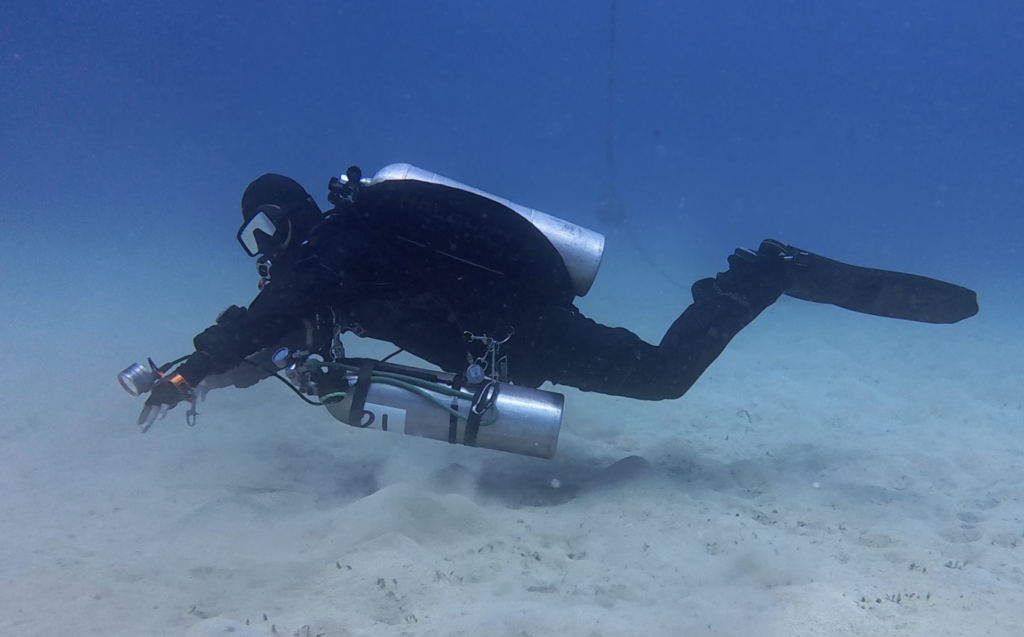
Hello ,This is Ryu from TEAL ORANGE DIVING
I've dived many times on Emmons. Here is my experience on USS Emmons
Recreational 150dives ,Technical 15dives,
Mooring line installation and Penetration for Oil reserch.
What Is the USS Emmons?
The USS Emmons: Ship Specifications and Design
Photogrammetry captured by Kyushu University in 2015 and by Brett Beldridg in 2025.
The USS Emmons (DD-457) was a Gleaves-class destroyer built for the United States Navy during World War II. Constructed by Bath Iron Works in Maine, she was launched on August 23, 1941, and officially commissioned on December 5 of the same year. At approximately 106 meters (348 feet) long and 11 meters (36 feet) wide, the Emmons was a substantial warship designed for speed, escort duties, and fleet operations. Her steam turbine propulsion system produced approximately 50,000 shaft horsepower, giving her a designed top speed of around 35 knots.The ship originally carried a range of naval weapons, including 5-inch guns, anti-aircraft guns, and torpedo tubes. In November 1944, she was converted into a high-speed minesweeper to support naval operations by clearing mines from important sea routes.This conversion marked a significant change in the ship's role, from a conventional destroyer to a vessel tasked with helping make waters safer for the Allied fleet. Her service eventually brought her to Okinawa, where she was lost during the Battle of Okinawa in April 1945.
USS Emmons (DD-457 / DMS-22) — Basic Specifications
| Ship Name | USS Emmons |
| Hull Number | DD-457 / DMS-22 |
| Ship Class | Gleaves-class destroyer |
| Country | United States Navy |
| Builder | Bath Iron Works, Maine, USA |
| Launched | August 23, 1941 |
| Commissioned | December 5, 1941 |
| Converted to High-Speed Minesweeper | November 15, 1944 |
| Length | Approximately 106 meters (348 feet) |
| Beam | Approximately 11 meters (36 feet) |
| Displacement | 1,630 tons (design displacement) |
| Propulsion | Steam turbines |
| Horsepower | Approximately 50,000 shaft horsepower |
| Designed Top Speed | 35 knots |
| Armament | 5-inch guns, anti-aircraft guns, torpedo tubes, and depth charges |
| Fate | Scuttled on April 7, 1945, after severe damage from kamikaze attacks during the Battle of Okinawa |
| Wreck Depth | Approximately 36–45 meters |
The History of USS Emmons
- 1941: Commissioned as a destroyer in the U.S. Navy.
- 1942–1944: Served in the Atlantic and European theaters, supporting convoy escort and amphibious operations.
- Late 1944: Converted into a high-speed minesweeper and transferred to the Pacific.
- April 6, 1945: Attacked by five kamikaze aircraft off the coast of Okinawa.
- April 7, 1945: Scuttled by USS Ellyson, becoming the wreck that divers visit today.
Why Is the USS Emmons an Important Wreck Dive Site?
The USS Emmons is more than just a wreck dive. It is a real World War II warship that sank off Okinawa during the Battle of Okinawa in April 1945.Today, the wreck serves as an underwater historical site and a memorial to those who lost their lives. The USS Emmons Association works to preserve the ship’s history and keep the memories of its crew alive for future generations.Diving the Emmons offers a rare opportunity to experience history firsthand. It is also a reminder that this site deserves our respect. Divers are encouraged to observe the wreck responsibly, without disturbing the remains or removing artifacts.
| Commissioned | December 5, 1941 |
| Date Sunk | April 7, 1945 |
| Time in Service | Approximately 3 years and 4 months |
| Total Crew Members Throughout Service | 664 |
| Crew Members Aboard During the Battle | Approximately 250 (figures vary by source) |
| Fatalities According to Official U.S. Navy Records | 60 |
| Wounded According to Official U.S. Navy Records | 77 |
| Americans Reported by the USS Emmons Association as Remaining Inside the Wreck | 60 |
| Japanese Reported by the USS Emmons Association as Remaining Inside the Wreck | 5 |
| Wreck Depth | Approximately 140 feet (43 meters) |
| Date the Wreck Was Discovered | February 21, 2001 |
How Is the USS Emmons Discoverd?
1. The Initial Discovery: Summer 2000
In the summer of 2000, local fishermen in Okinawa reported seeing oil on the surface of the water. In response, the Japan Coast Guard conducted an underwater survey using a camera and found an unidentified object on the seabed. However, its identity could not be determined at the time.
2. Research by Local Divers
Richard Ruth of Fathoms Dive Shop, together with other local divers in Okinawa, began investigating the wreck. They researched historical records and information available online in an effort to identify the sunken vessel.
During their research, they found a website documenting the history of the USS Emmons. The location of the object surveyed by the Japan Coast Guard was close to the position recorded in historical accounts of the Emmons' sinking. This led the divers to believe that the wreck could be the USS Emmons.
3. February 21, 2001: The Wreck Is Discovered
On February 21, 2001, Richard Ruth and his dive team discovered a wreck believed to be the USS Emmons off the northern coast of Okinawa's main island.The ship was found lying on its starboard side. Its anchor remained at the bow, and several weapons, including 5-inch guns and 40mm and 20mm anti-aircraft guns, were still visible.The stern, however, showed extensive damage, bearing visible evidence of the fierce fighting that took place in April 1945.
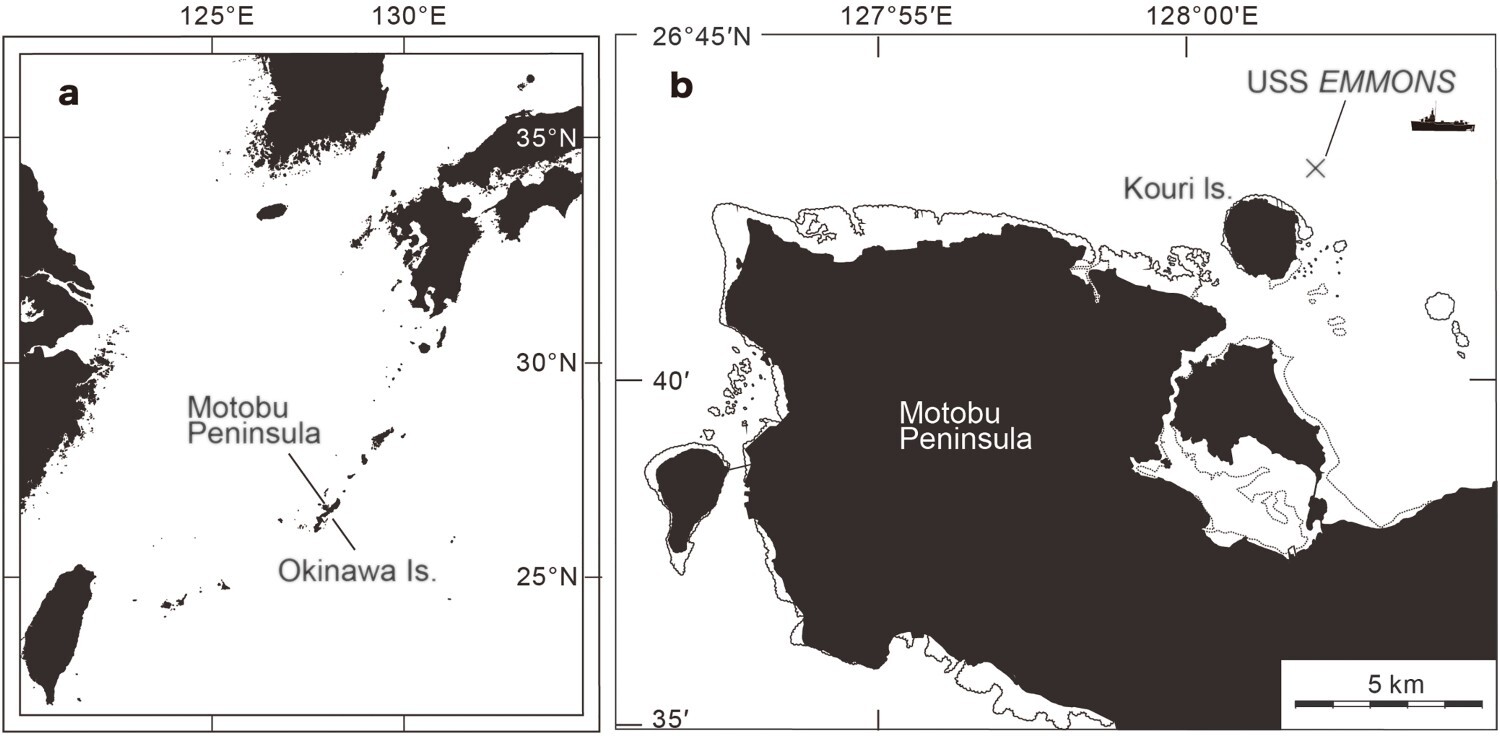
How Deep Is the USS Emmons?
USS Emmons Depth and Wreck Layout

How Long Can You Stay on the Wreck?
When diving on air, the No-Decompression Limit (NDL) at the maximum depth of 40 meters is approximately 7 minutes.The descent is normally conducted slowly and carefully, taking around 2–3 minutes to reach the wreck. According to the U.S. Navy Dive Tables, the descent rate should not exceed 21 meter per minute.The total dive time is typically around 25 minutes.
What Certification and Experience Do You Need to Dive the USS Emmons?
Required Certification
Divers should hold an Advanced Open Water certification or equivalent, with experience making safe dives to 30 meters.A Deep Diver certification or equivalent, with previous experience diving deeper than 30 meters, is also required. Nitrox certification is not mandatory. However, divers who are Nitrox certified may choose to dive using an appropriate enriched air nitrox mixture.
How Many Logged Dives Do You Need?
Some dive operators require a minimum number of logged dives, such as 50 or 100. At TEAL ORANGE DIVING, we do not set a specific minimum number. We believe that recent diving experience is more important than the total number of dives logged. For example, a diver who has completed 30 dives within the past few months may be better prepared than someone with 100 logged dives who has not been diving for a long time.Instead of setting a minimum dive count, we require all participants to complete a check dive before diving the USS Emmons.
Instead of setting a minimum dive count, we ask all participants to join a check dive before diving the USS Emmons.Please don't feel nervous — this is not a test or an assessment. It's simply an opportunity to prepare for the Emmons dive in a relaxed environment. During the check dive, we'll take time to get comfortable in the water, get to know each other, check our equipment, establish communication, and review the basic team procedures we'll use on the Emmons.This preparation dive is part of our approach to making the Emmons experience as safe and enjoyable as possible. It is required for everyone, including professional divers and experienced technical divers.
What Are the Diving Conditions at USS Emmons?
Diving the USS Emmons is possible throughout the year, but summer generally offers the best conditions and the highest chance of a successful trip.During the winter months, particularly from November to March, strong northerly winds significantly reduce the number of days when diving is possible.The least favorable wind directions are from the south to the east, while winds from the northeast through west can also affect conditions and may limit access to the site.Currents can occasionally be strong, but extremely powerful currents that cause bubbles to stream horizontally are rare.A shot line runs from the surface down to the wreck, making the descent straightforward and allowing divers to reach the wreck without excessive physical effort.
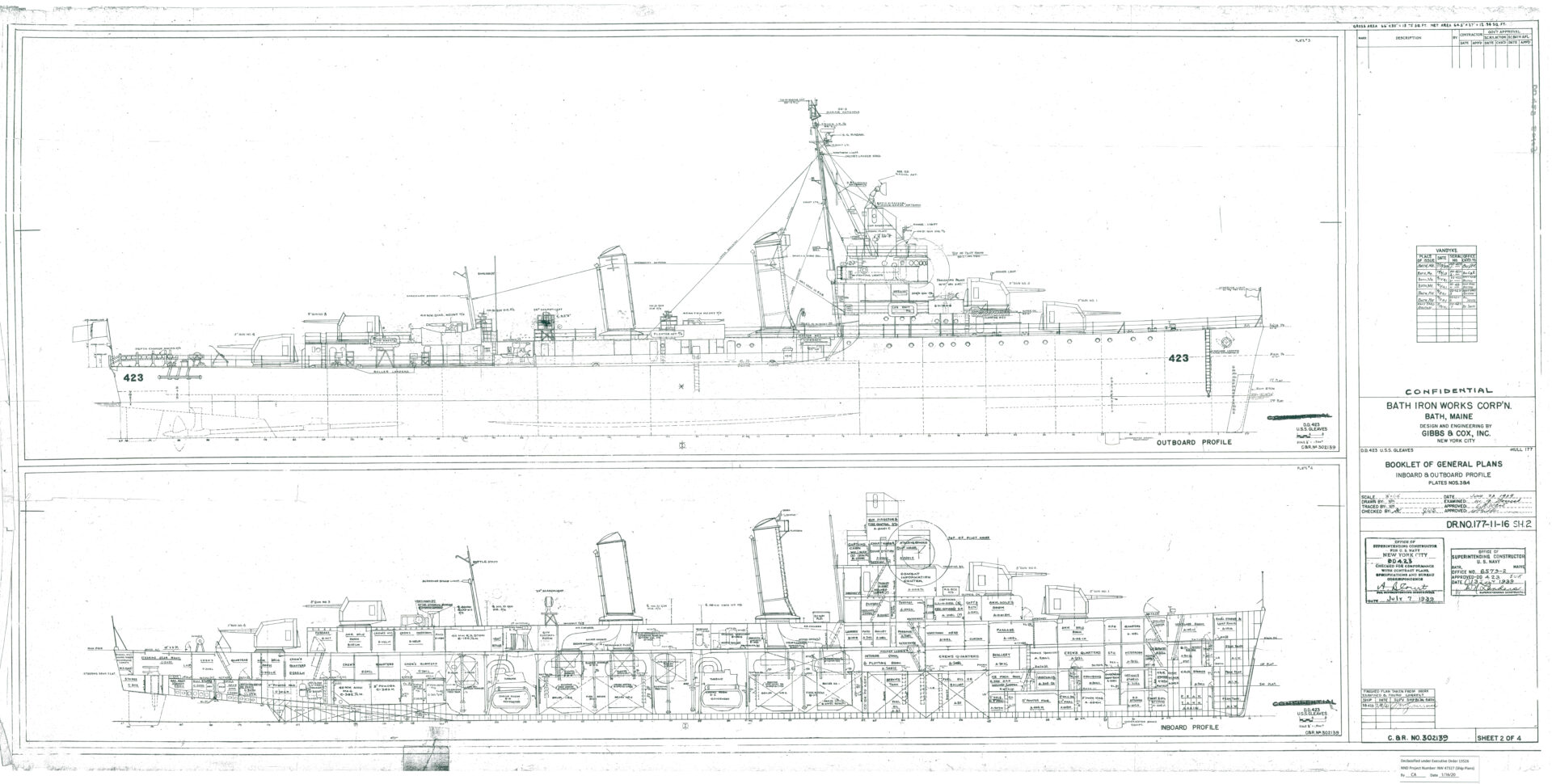
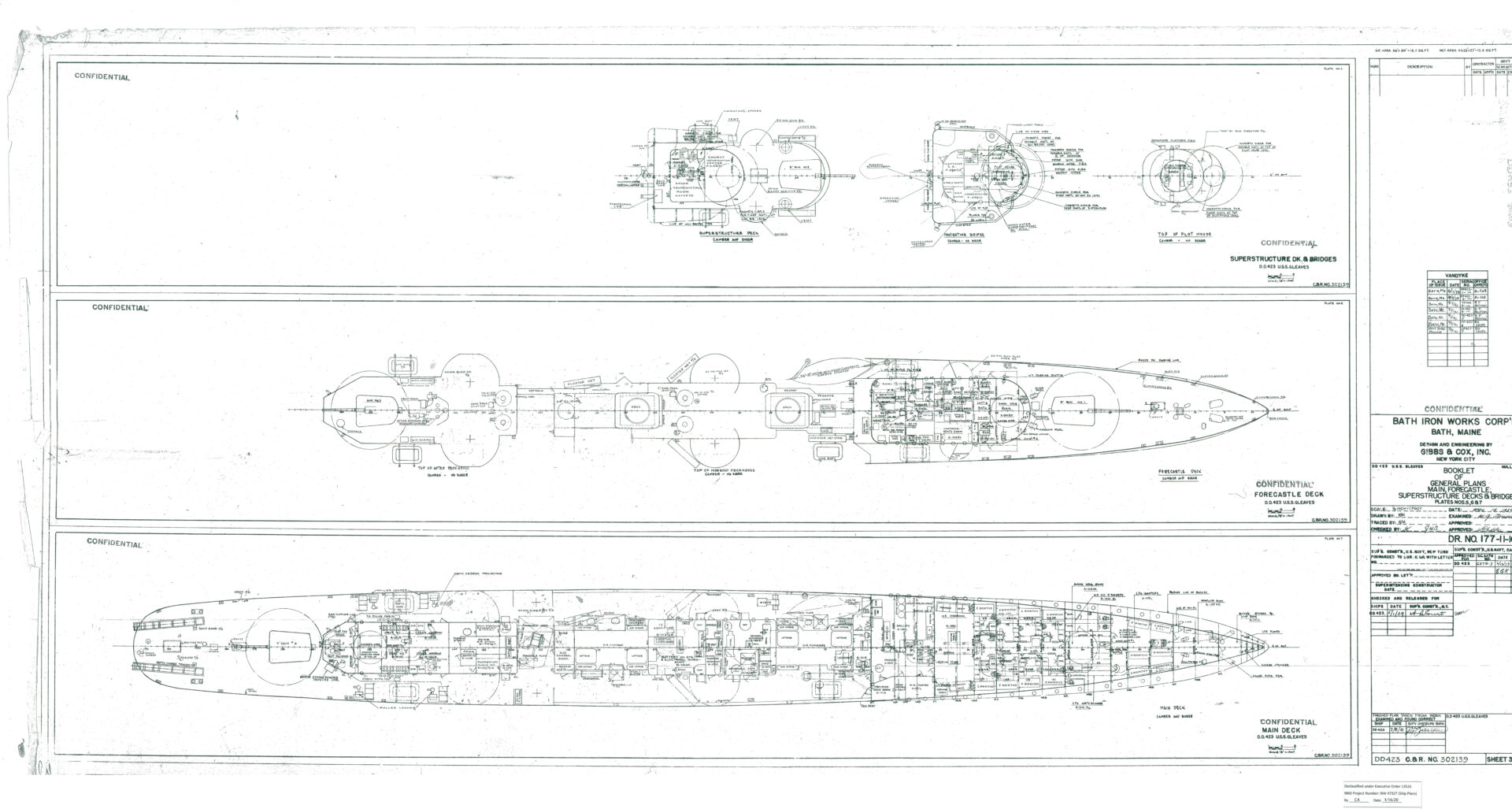
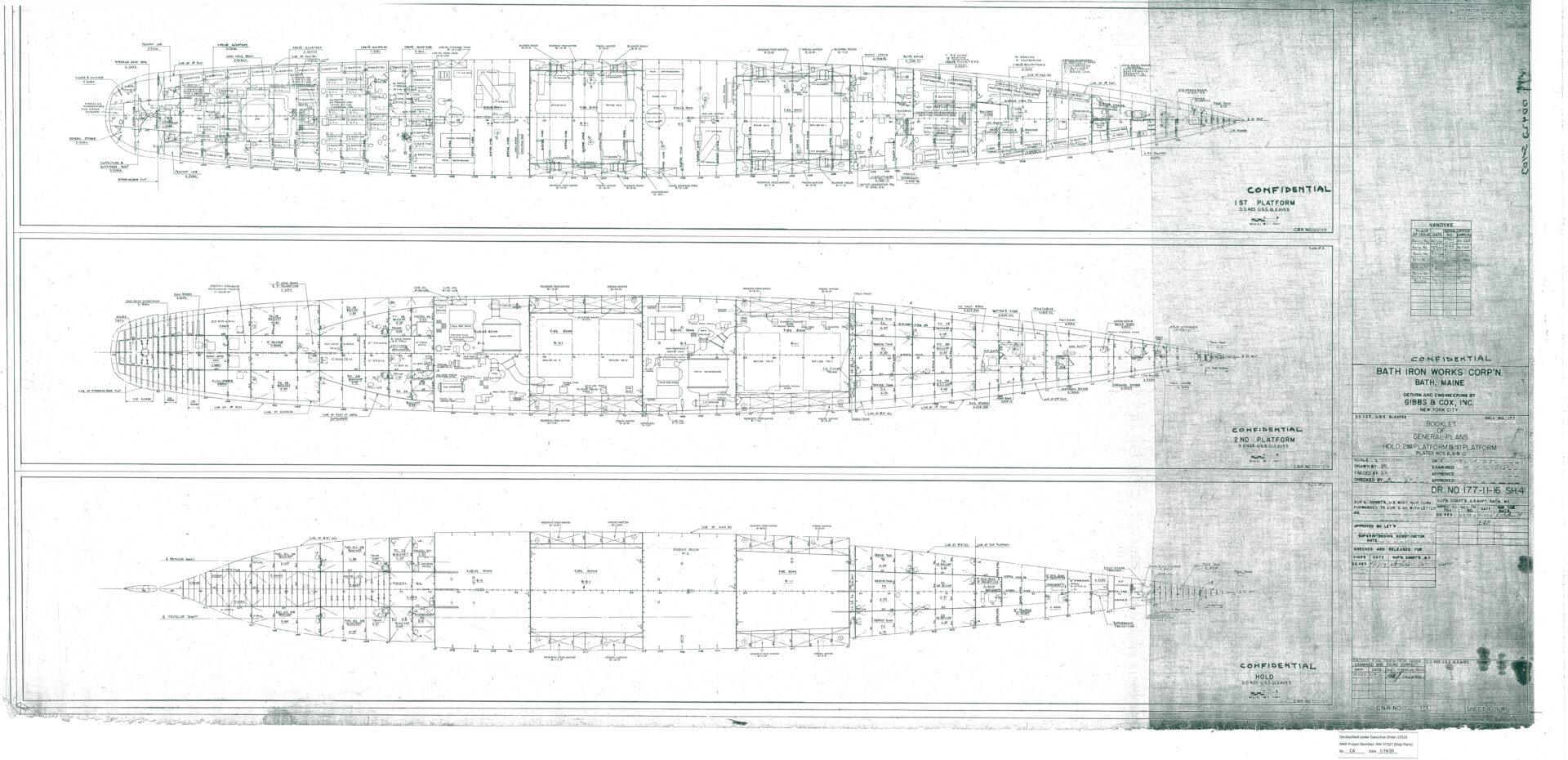
Blue print of USS Emmons
What Can You See on the USS Emmons Wreck?

Exploring the Bow, Midship and Stern
The Tear of Emmons
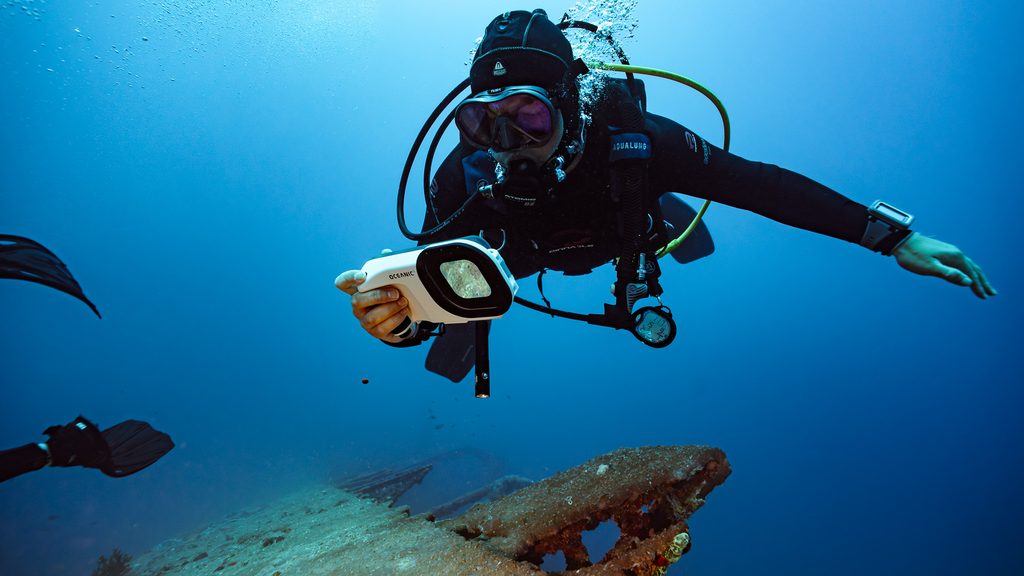
The black spots being photographed by the diver are oil droplets that continue to leak from the wreck, one drop at a time, even 81 years after the ship sank.
They are located a few meters aft of the memorial plate near the center of the ship. According to the ship's blueprint, one of the two engine rooms is located in this area, and it is labeled "LUB OIL STORAGE TANK."
Kamikaze Aircraft Engine 九八式直協機(Tachikawa Ki-36)
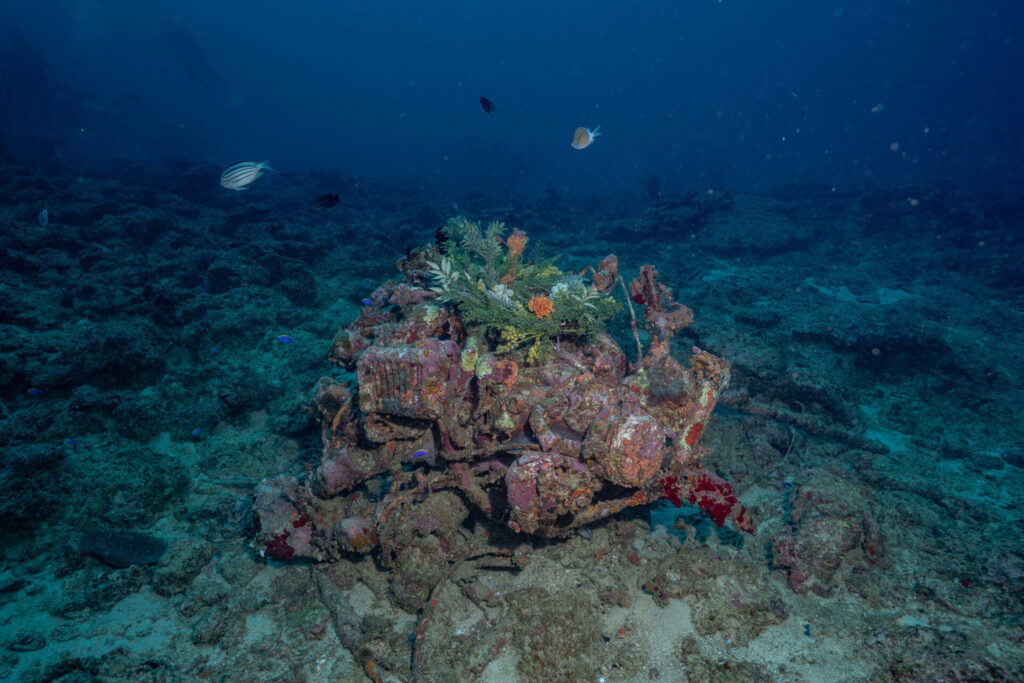
The engine lies at a depth of approximately 45 meters, around 16 meters north of the stern of the USS Emmons.The academic paper referenced below suggests that it may belong to the fourth kamikaze aircraft shown in the photograph below. The researchers propose that, after drifting for approximately nine hours from the battle site, the aircraft eventually struck the seabed. For reasons that remain unclear, the engine may have survived the impact without exploding and come to rest at its current location.Interestingly, an engine believed to be the same type is on display at the Mansei Tokko Peace Memorial Museum in Kagoshima Prefecture, Japan. Visitors can therefore see an example of the same type of engine as the one lying on the seabed near the USS Emmons.
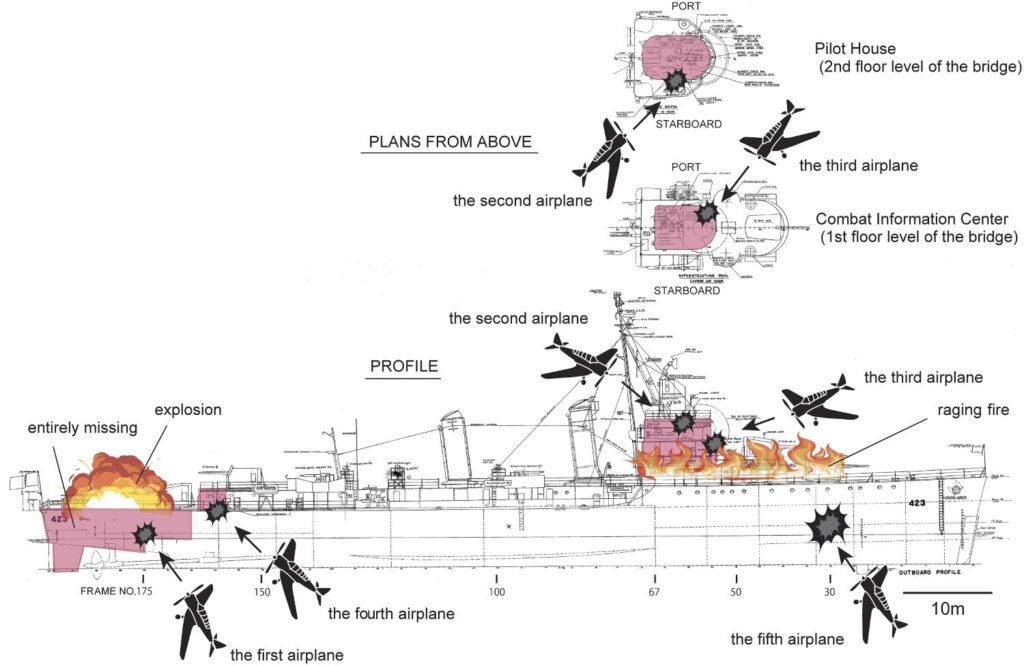
Reconstructing a Second World War Sea Battle: The Underwater Site of USS Emmons and a Japanese Special Attack Airplane
Memorial plate
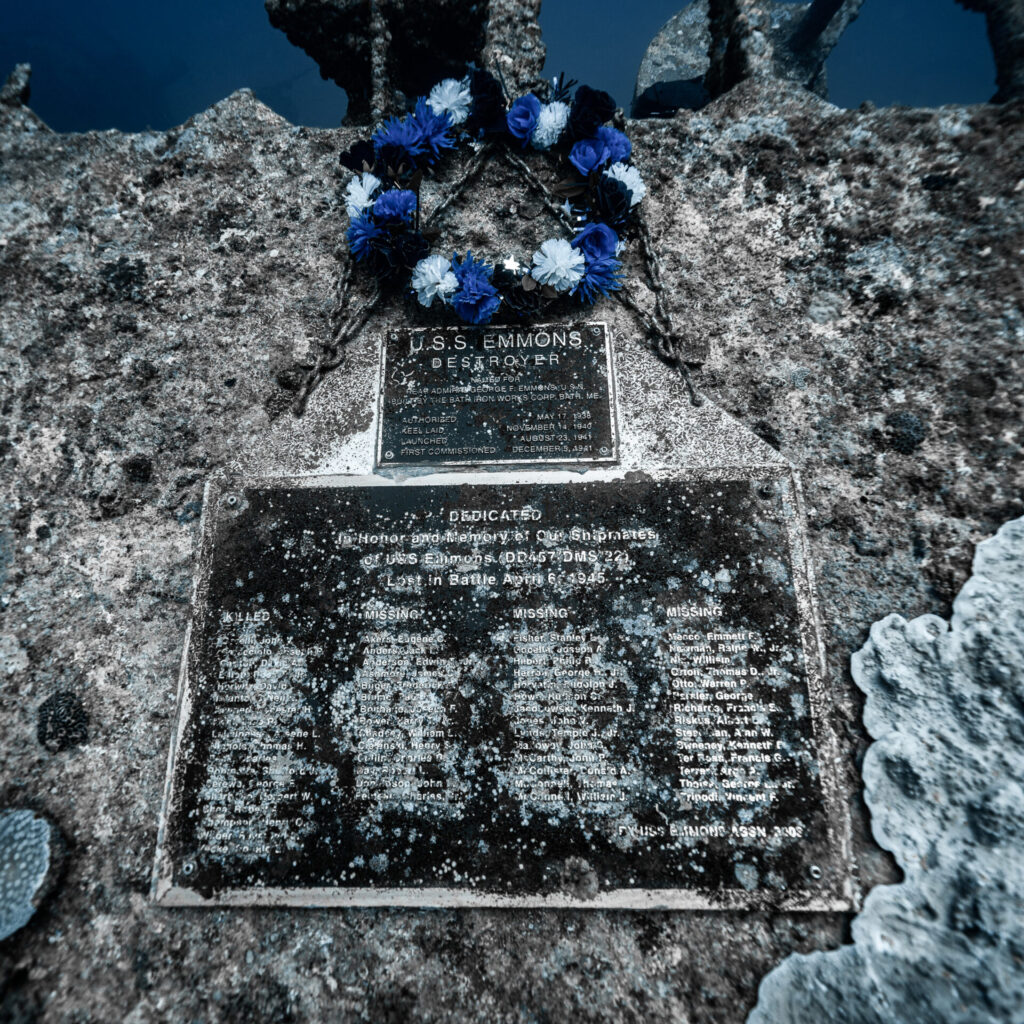
The memorial plate located near the center of the wreck.
A memorial dive is held every year.
USS EMMONS MEMORIAL DIVES
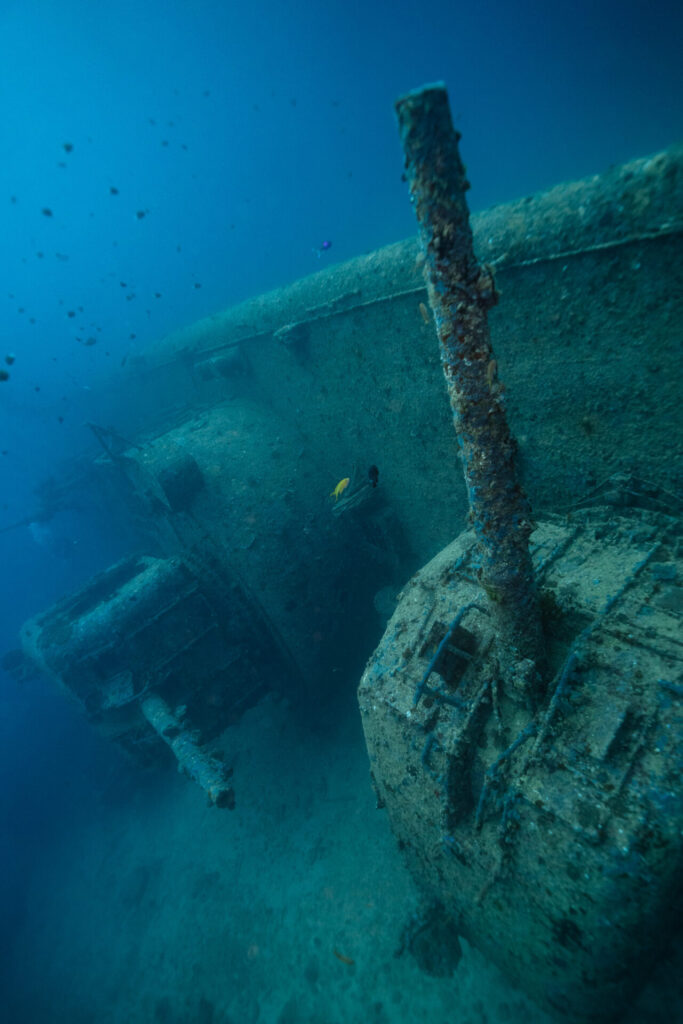
Paravane
Paravane still remains stowed on the port side near the stern.
No1 and No2 Gun
he main gun at the bow still retains its impressive presence.
Crew room
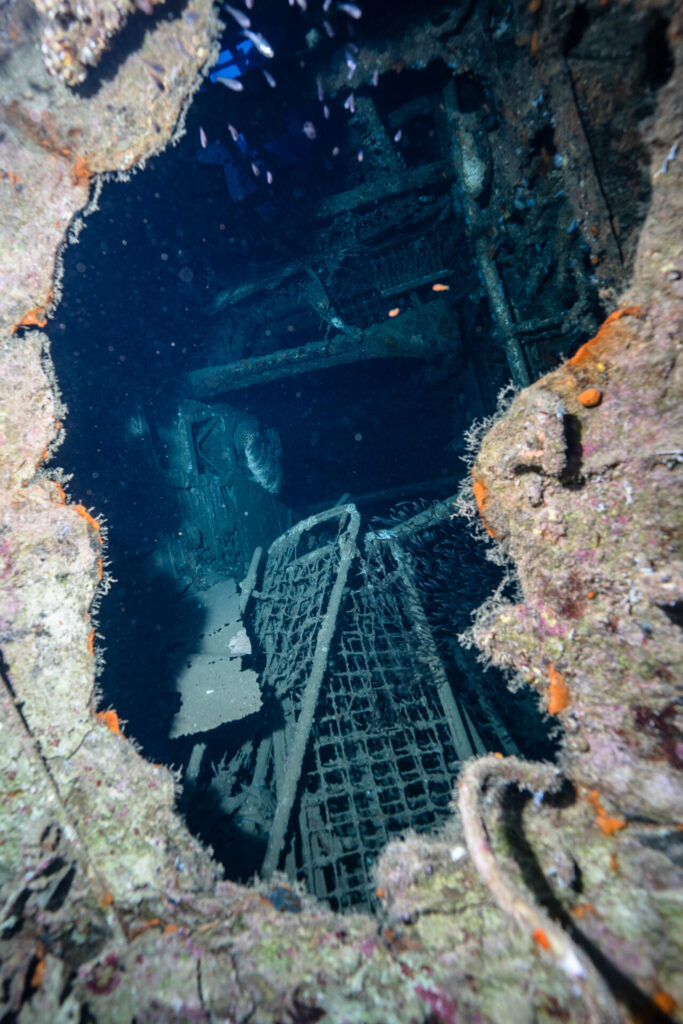
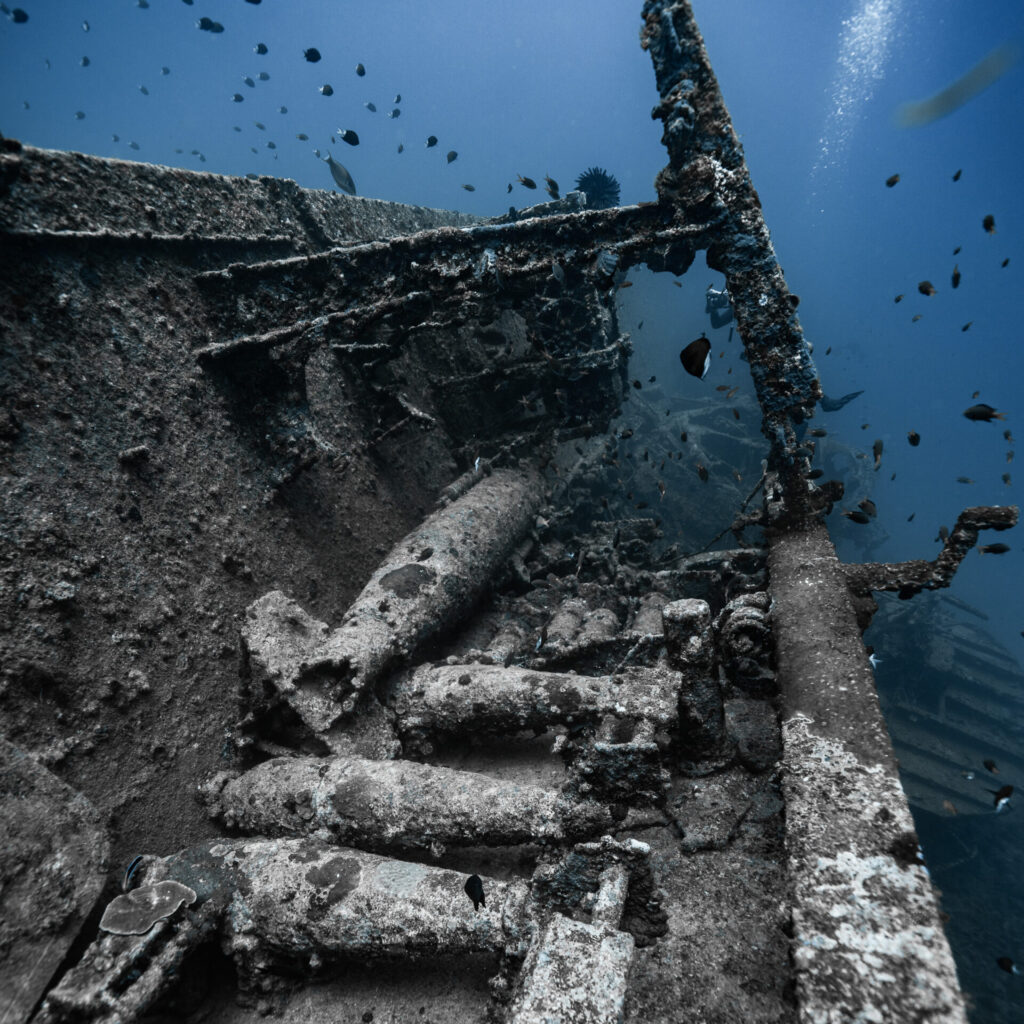
The stern suffered extensive damage from the explosion caused by the first kamikaze strike. The frames visible in the photograph are the remains of the crew's bunk beds. This area was known as the crew's berthing space. The powder room was located nearby.
Marine Life Around the Wreck
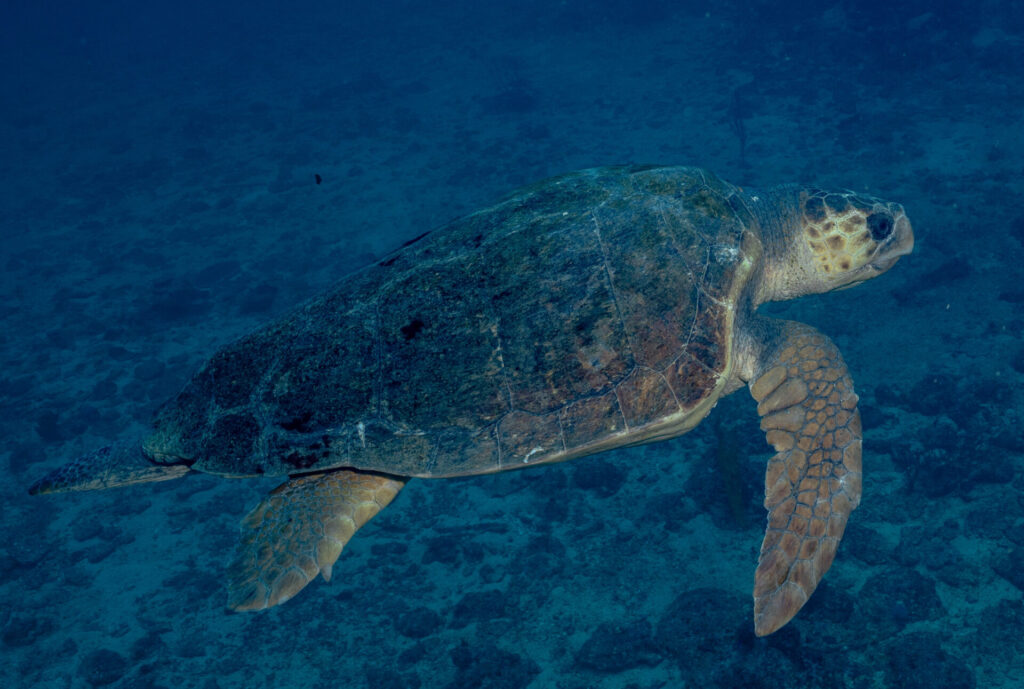
A large loggerhead sea turtle has been making seasonal appearances around spring each year since around 2025. It has been filmed behaving quite aggressively, and there have reportedly been incidents of divers being bitten on the shoulders and arms.
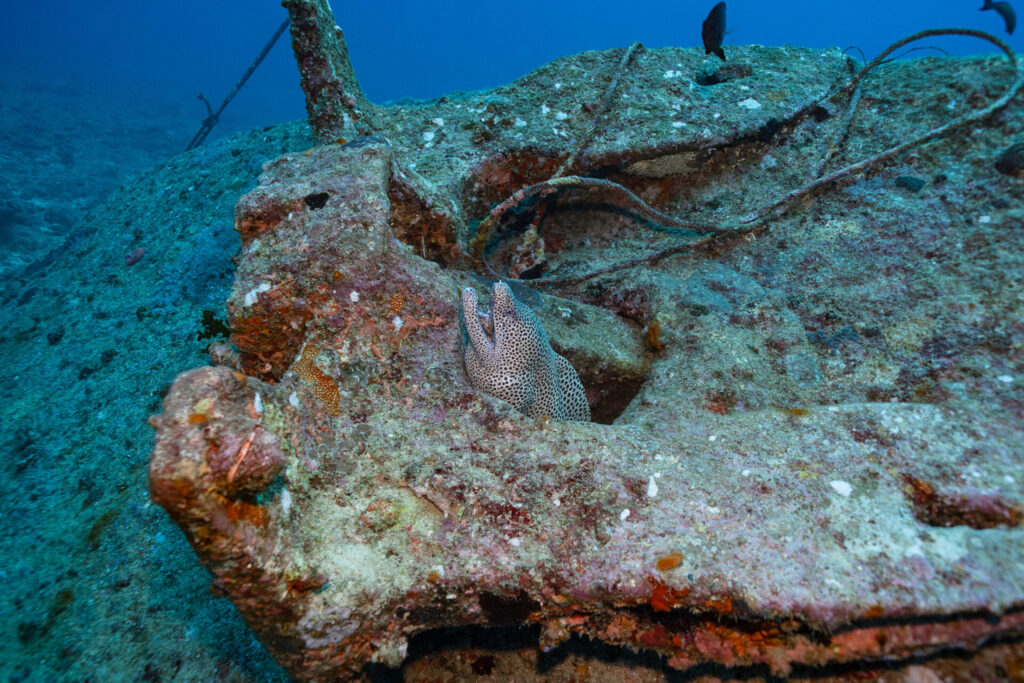
A false moray eel has made its home around the anchor at the bow.
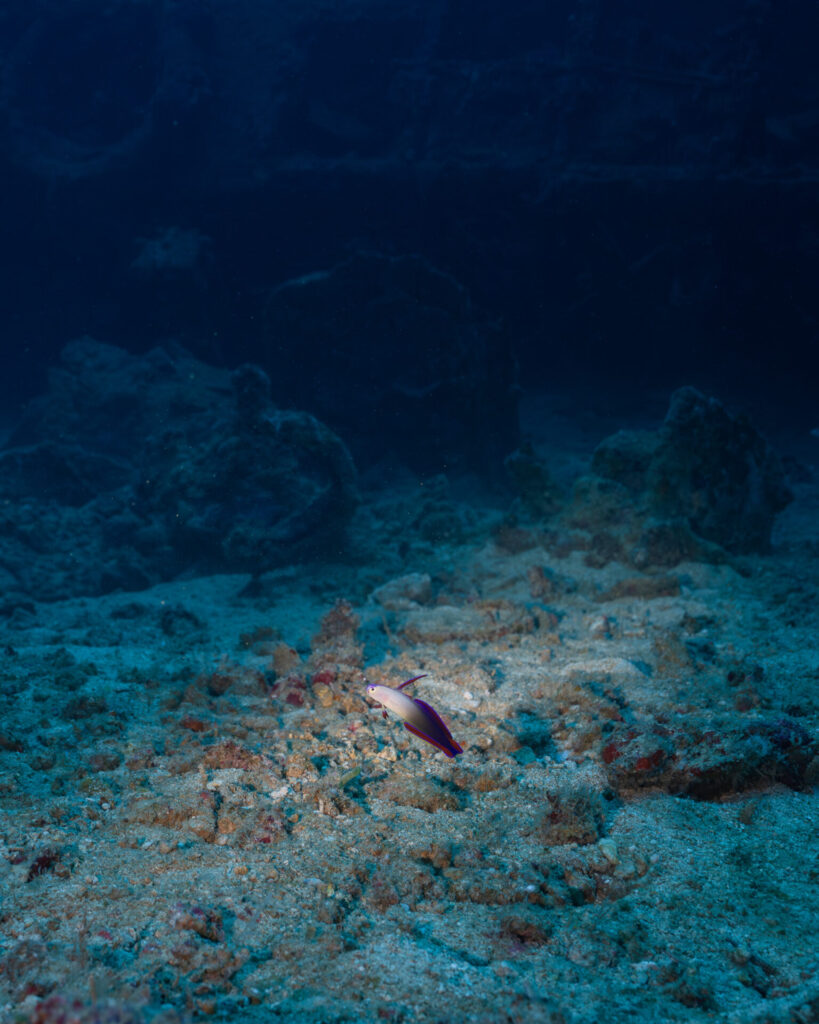
A Helfrich's dartfish can be found on the seabed near No. 2 Gun. This individual is remarkably approachable, allowing divers to get close for photographs. Up to two individuals have been spotted in this area.
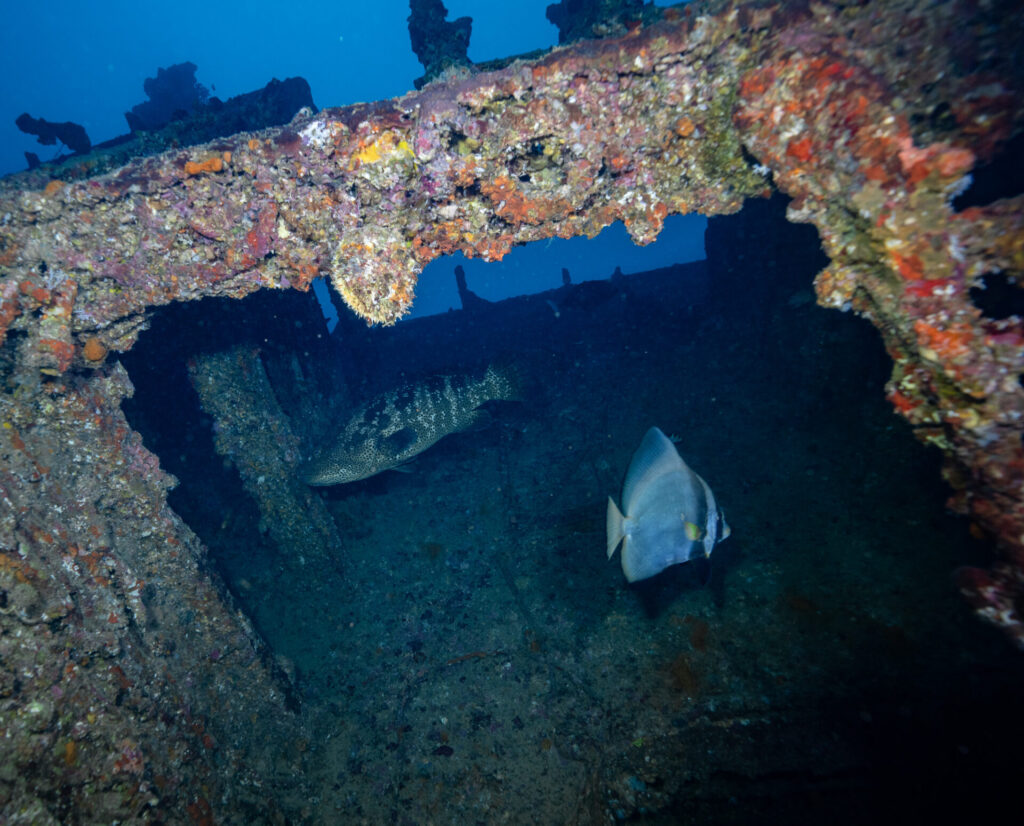
A batfish swimming alongside a grouper.
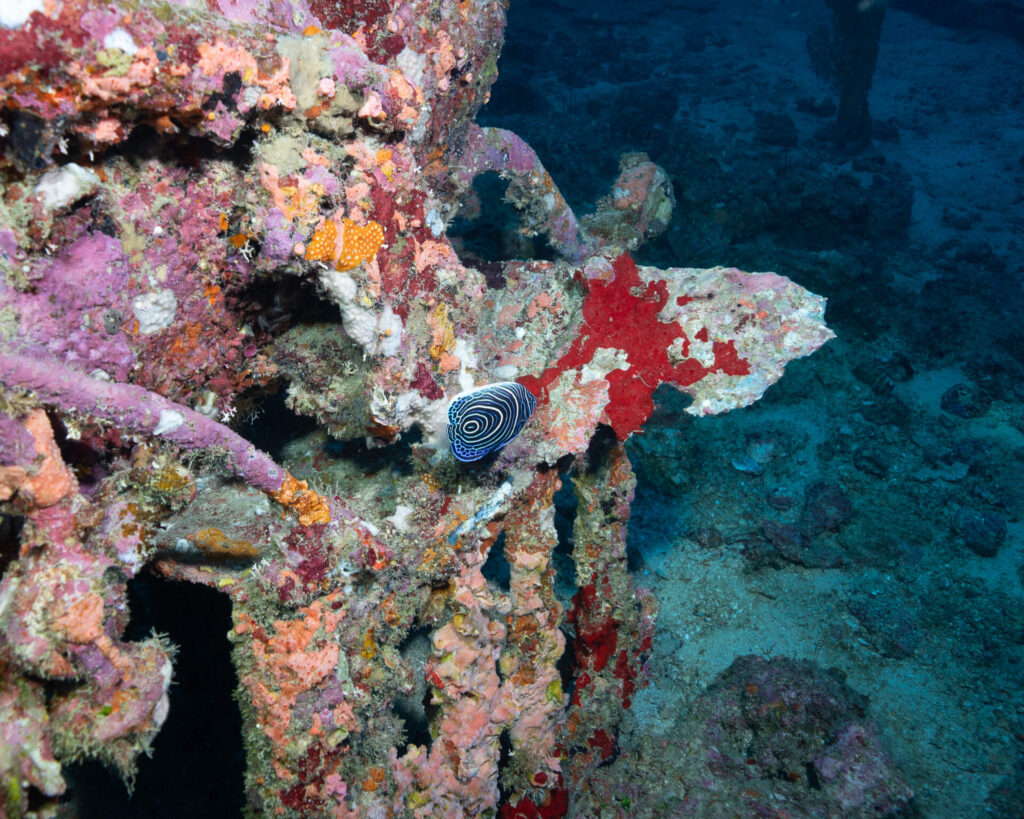
A juvenile emperor angelfish spotted around the engine of the Japanese Type 98 reconnaissance and cooperation aircraft.
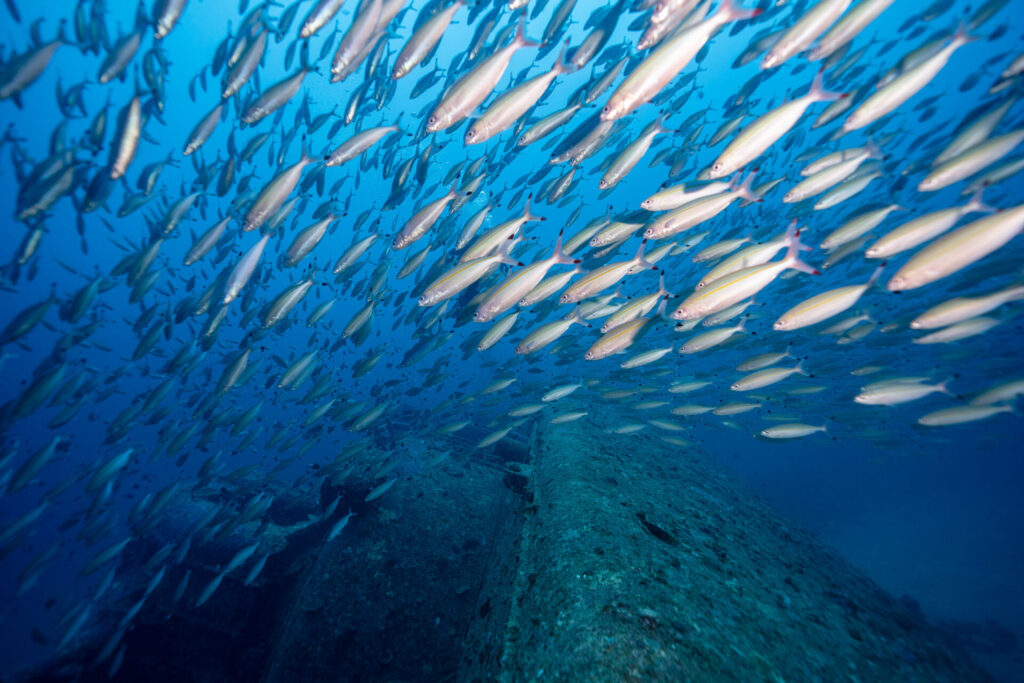
A large school of fusiliers swimming around the wreck.
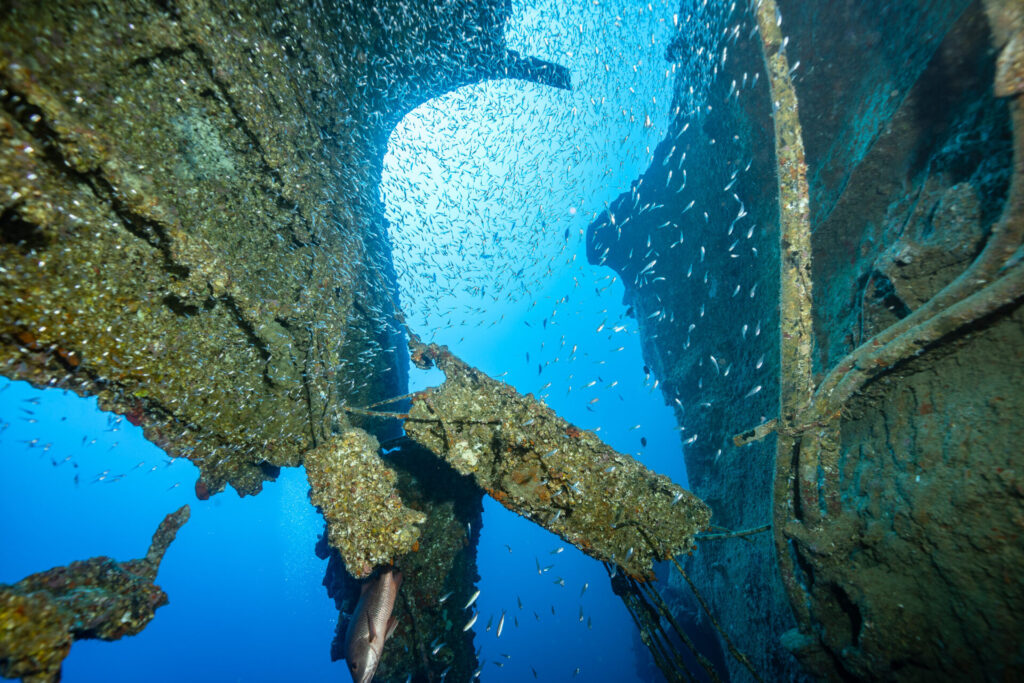
A school of glassfish that has made its home around the stern of the USS Emmons.
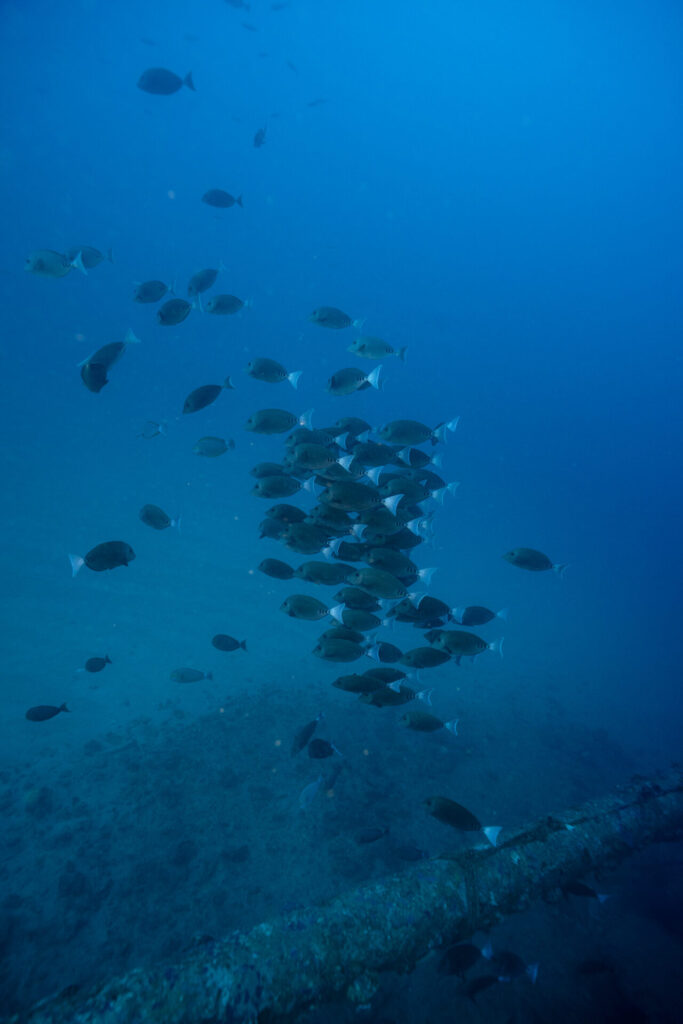
A school of surgeonfish gathering around algae growing on the rope used by divers during their ascent.
Recreational Diving vs. Technical Diving on the USS Emmons
Recreational Wreck Diving
For recreational diving on the USS Emmons, dives are planned to remain within the No-Decompression Limit (NDL).Our dive plan is based on two key factors: NDL and gas management.The first is the NDL. At a depth of around 40 meters, the available no-decompression time is very limited. Depending on the dive profile and conditions, divers need to begin their ascent after approximately 7–10 minutes at depth.The second factor is gas management. We need to reserve enough gas for a safe ascent from the wreck to the surface. For this reason, we use 50 bar as our reserve pressure and begin the ascent when the tank pressure reaches approximately 110 bar. This is our turn pressure.The total dive time is usually around 25 minutes. However, the actual time spent exploring the Emmons on the bottom is often less than 10 minutes per dive.Even with such a short bottom time, the USS Emmons continues to captivate divers from around the world. It is one of those places that never seems to lose its appeal, no matter how many times you dive it.
Does Technical Diving Let You Explore More of the Wreck?
Technical diving on the USS Emmons allows divers to go beyond recreational no-decompression limits, with a maximum depth of 45 meters.In technical diving, bottom time refers to the time spent at depth exploring the wreck. With an appropriate technical dive plan, divers can spend approximately 25 minutes on the bottom, with a total dive time of around 50–60 minutes.Compared with recreational diving, this can provide two to three times as much time to explore the wreck, offering a very different experience of the USS Emmons.Divers with an Advanced Open Water certification or equivalent may meet the initial prerequisites for further training, depending on their experience and the specific course requirements.At TEAL ORANGE DIVING, you can pursue technical diving training through either TDI or PADI, with course options depending on your current certification and experience.
How Much Does USS Emmons Diving Cost?
What Is Included in the Price?
| GUIDED DIVING Tax in | |
|---|---|
| 2dives ( 25min each dive ) | 28,600 |
| Full equipment rental | 7,700 |
| EANx | 2,200 |
Recreational Diving
Recreational diving on the USS Emmons is limited to two dives per day. We do not offer three-dive trips.A surface interval of approximately 90 minutes is required between dives. For this reason, the boat returns to the harbor after each div
Open Circuit (OC) Technical DivingOC technical dives typically have a total dive time of approximately 50–60 minutes.Because of the shorter overall dive profile, a private boat charter is not required. OC technical diving is offered at the same price as recreational diving, on a per-dive basis.
CCR Technical DivingCCR technical dives typically have a planned dive time of approximately 90 minutes.Due to the longer dive duration and scheduling requirements, a private boat charter is necessary.For more information about technical diving on the USS Emmons, please visit our dedicated Emmons page.
Where Is the USS Emmons and How Do You Get There?
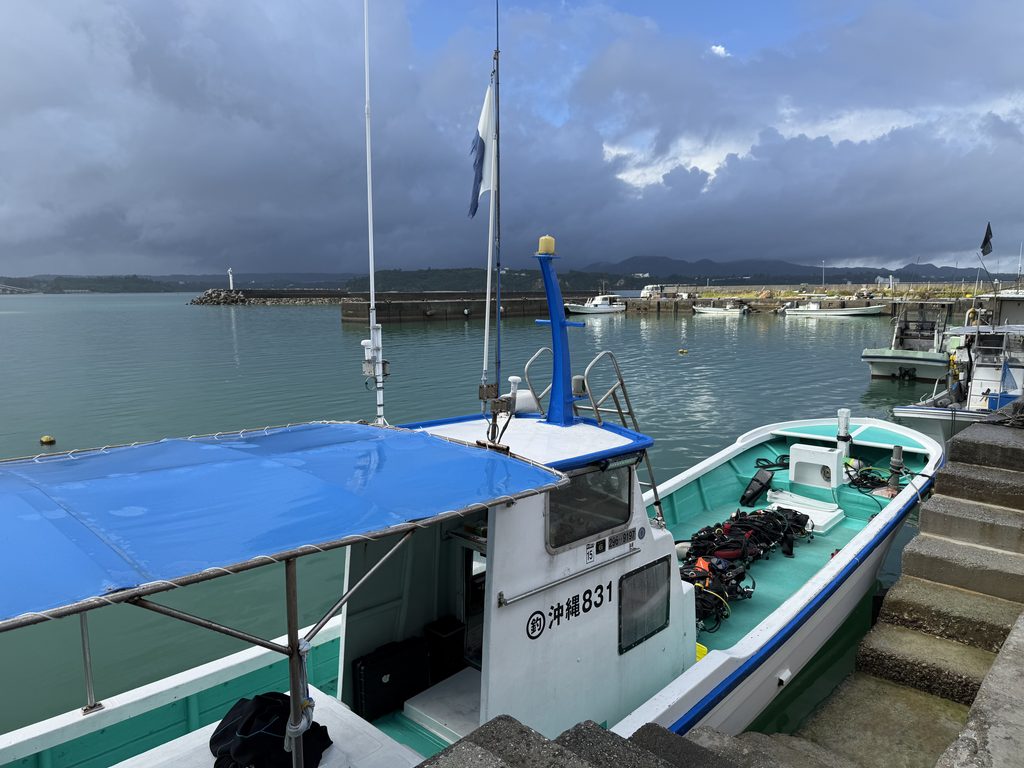
Location Near Kouri Island(meet at here)
Can You Dive USS Emmons While Staying in Naha?
If you are staying in Naha, please allow at least 90 minutes to drive to Kouri Island.We strongly recommend renting a car, as public transportation does not arrive early enough to meet our departure schedule.Please note that we do not provide pickup or drop-off services from Naha for USS Emmons trips.If you are still looking for accommodation, please check our recommendations here.
Tour schedule
| Pick up (Onna area) | 6:30 |
| Meet at the Dive Site : Kouri port | 7:30 |
| 1st dive | 8:30 |
| 2nd dive | 10:30 |
| Drop off | 2:30 - 3:00 |
How to Book a USS Emmons Dive with TEAL ORANGE DIVING
How to find us
TEAL ORANGE DIVING
Address:
905-0026
122Kise,Nago,Okinawa,Japan
Japanese Address:
〒905-0056 沖縄県名護122
Ryu(English/Japanese)
+81 7015700777
WhatsApp : wa.me/817015700777
Feel free to email us with any questions — we’ll get back to you within 24 hours!
Our diving school
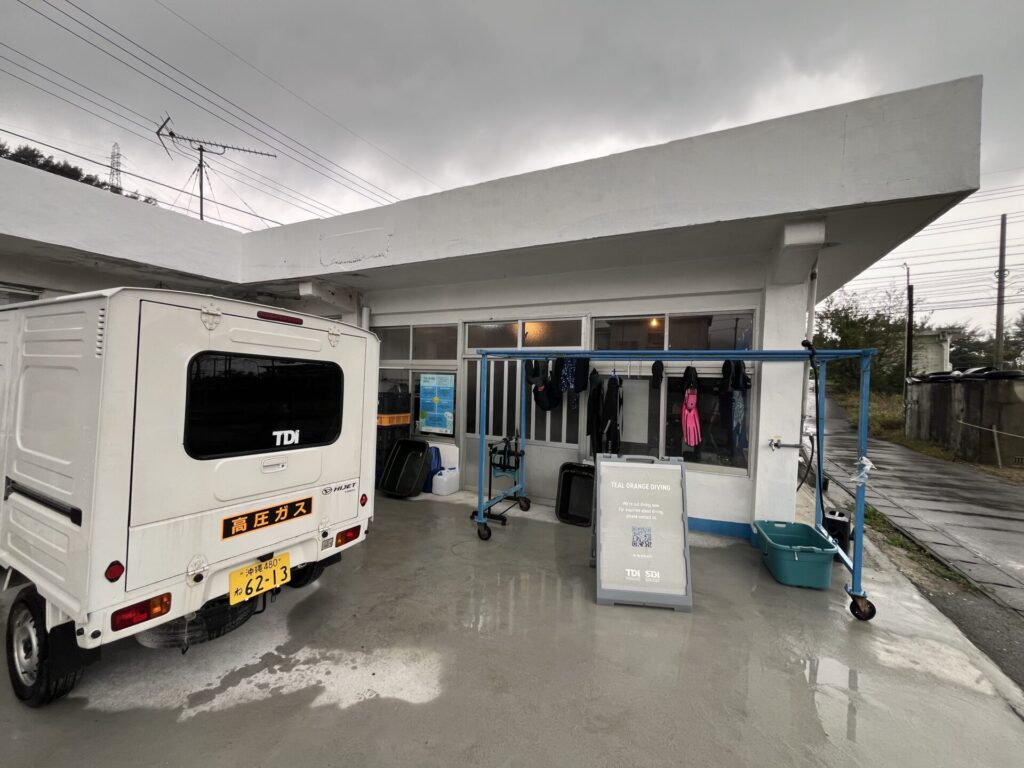
We are a small dive shop located in the nature-rich northern area of Okinawa.
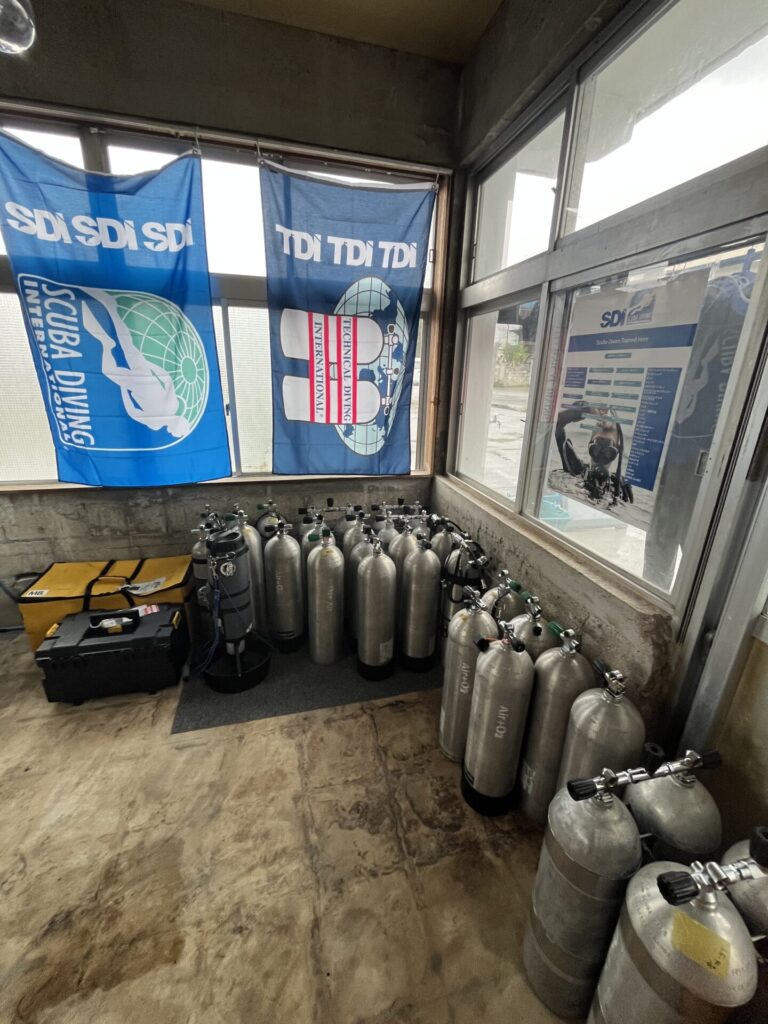
We offer small-group diving with equipment systems inspired by technical diving, guided dives led by technical instructor, and PADI, SDI, and TDI diving courses.From beginners to advanced divers, come and fully experience the beauty of Okinawa.
Frequently Asked Questions About Diving the USS Emmons
1. How deep is the USS Emmons?
For recreational diving, the maximum depth is approximately 40 meters (130 feet).
2. How much diving experience should I have before diving the Emmons?
We don't set a strict minimum number of logged dives, but we recommend having around 30 dives or more to feel comfortable and prepared.
3. Do I need a Deep Diver certification?
Yes. A Deep Diver certification or equivalent is required. If you don't have one yet, you can also take the Deep Diver course with us.
4. Is a check dive mandatory?
Yes, a check dive is required for everyone before diving the USS Emmons. Please allow enough time in your travel schedule for this preparation dive.
5. Can I join the trip if I'm staying in Naha?
Yes, you can! However, Naha is quite far from our departure area, so you'll need to leave very early in the morning. We strongly recommend renting a car.
6. When is the best season to dive the USS Emmons?
Summer is generally the best season, especially when southerly winds provide favorable conditions.
7. Is rental equipment available?
Absolutely! We have high-quality rental equipment available, including some of our favorite gear.
8. Can I dive the Emmons in sidemount or doubles?
Of course! Sidemount and backmount doubles are both welcome. These are actually some of our favorite diving configurations.
9. What happens if the sea conditions are bad?
Weather and sea conditions can sometimes prevent us from diving. If the trip is cancelled due to unfavorable sea conditions, you will receive a full refund.