contributor : Freya Harrison
The reality of working in Okinawa on a working holiday visa in the dive industry - 15 min read
I have been teaching SCUBA diving since 2022, and I honestly never expected to find myself living and working in Okinawa. Up until last year I had never even heard of the island, never mind that it was a prime spot for diving! Okinawa has grown in popularity within the dive community over the last year largely due to social media and viral reels showing hammerhead sharks, manta rays, stunning coral reefs and landscapes. More tourists are visiting each year, and many divers are choosing it as a specialised dive holiday destination. This in turn means more dive professionals are interested in working here, because getting paid to dive in beautiful places is of course the ultimate dream! For all those curious about the realities of working on this often overlooked island, this article is for you.
Social Media Vs Reality
First things first, let’s dive into the reality of underwater life in Okinawa. Do people really see hundreds of hammerhead sharks swimming over their heads? Is it true you see oceanic manta rays in crystal clear blue waters? Boastful coral reefs? Swimming with whales?
The answer to all these questions is yes - but it depends on the time of year and more importantly location! Okinawa prefecture is part of the Ryukyu island chain, and includes over 160 islands organised into five major archipelagos stretching all the way to Taiwan. Hammerhead sharks can be seen during winter to early spring around Yonaguni Island, whilst manta rays can be spotted all year round (although best season late summer to autumn) at Ishigaki Island. Although this diving can be incredible to experience, getting work on these islands as a foreign dive professional is much more difficult compared to Okinawa main island as these trips are mostly run by local Japanese dive centres.
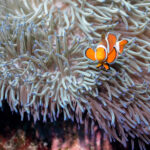
Okinawa's main island is primarily made from limestone rock which is the perfect substrate for coral growth and therefore the island is surrounded by gorgeous coral reefs that you can experience just by walking off the beach! A huge biodiversity of reef fish, warm waters and amazing visibility for the majority of the year means that diving in Okinawa really does feel like being inside an aquarium. On top of that, the rapid erosion of limestone rocks makes for some incredible topography including caverns, arches, channels and multiple swim-throughs. Many turtles and reef sharks reside around Okinawa island, and the lucky few might even spot a manta on a visit to the neighbouring Kerama islands. Over the winter period as the water temperature drops, many dive shops also run snorkel trips with whales.
Some dive sites experience stronger currents, but overall recreational diving in Okinawa is often a relaxing experience and a top choice for lovers of macro-diving with nudibranchs, flatworms, frogfish and seahorses being common.
There is also a market for qualified and prospective technical divers and we have a separate article on this which you can read here.
Understanding the dive industry of Okinawa
Before looking for work in Okinawa, it is important to be aware of the way the dive industry works as it looks quite different to that of other more popular dive destinations. Many dive shops on the island are small centres with maximum 2-3 staff, and it is not uncommon for some locals to run a dive centre from their home. This means that you are often working in small teams, so good interpersonal skills are essential! With that being said, there are still some larger companies on the island that hire multiple staff, but these positions tend to be more seasonal rather than a year long contract.
With many small local shops, it is rare for a dive centre to own its own tanks or boat which means the dive industry in Okinawa is split into three categories: the dive shops, the tank rental shops and the boats.
Tank rental shops provide standard Japanese 10L yoke, steel cylinders. This introduces a few challenges for the standard instructor, especially for those with similar experiences as myself working in Koh Tao where aluminium tanks are pre-loaded onto the boat for us! With steel tanks being heavier, this does change the weighting of yourself and customers. Personally, I always like to carry a spare weight or two with me and this took me a few dives to get used to, at first feeling like a crate of rocks! As a dive professional in Okinawa you need to carry multiple tanks and load them onto the boat, so good fitness and strength is necessary. It is also worth noting that many customers are unable to manage the weight of the gear on the surface, particularly younger or more petite guests.
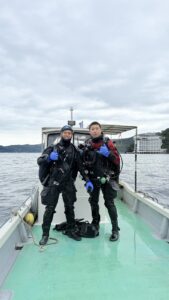
[Sidenote for those serious about being the most prepared dive pros: bring a spares box onto the boat! Yoke tanks means occasional o-rings blowing. Many guests in Okinawa (especially Americans who live on the island) have their own gear, sometimes with DIN regulators so an adaptor is another useful item to include in your box!]For the boats, we use local fishermen. Each dive site is accessed from different ports and different captains, with multiple shops on the same boat. Dive centres work hard to maintain good working relationships with the captains and other centres. The captains are not afraid to ban a specific dive shop from using their services, which means as a professional you are always “switched on” and representing your dive shop at all times, especially as a foreigner! This includes being polite to other professionals, managing your space and gear on the boat (as some are very small), helping your guests as well as other shop guests in and out of the water, and good time management. With the exception of a handful of boats, professionals present on the boat are often required to assist with deckhand duties such as mooring and anchoring. The boats are small and the tasks are not difficult but previous deckhand experience is definitely a bonus!
One of the biggest challenges I have found since working here is managing gear! In Koh Tao and Australia alike, the dive centres have their own taxis and dive boats which always leave from the same place. In Okinawa, you pack up your truck and go to a different port each day depending on the dive site which can be anywhere from 10 minutes to a 2 hour drive. You need to make sure you have all your customers gear, any spare equipment, spares box, first aid and O2 kits, tanks (if your shop has their own), chairs for surface intervals, water for guests, etc. Often when your customers return to the boat, they want to get out of their gear as quickly as possible which often results in masks, computers and fins being left in all sorts of places! The last thing you want is to lose equipment or leave it at a port that's over 1 hour drive away from your shop!
Working on boats in Okinawa is a unique scenario for most dive professionals, and once you fully understand the system and get accustomed to it, it is actually a really lovely experience! You get to meet a lot of other dive professionals from all over the world, hear their stories and share advice. It can be a great way to make friends on the island.
Shore dives are also very common in Okinawa, so it's good to also be comfortable with these. I find shore dives can be very relaxing in terms of there are no time constraints, however they can also be a test of your patience with some customers struggling to carry their gear for any length of time!
A note on safety
The one thing that has surprised me the most in Japan, is the differing safety standards compared to my previous places of work. Although all boat passengers are required to wear a form of buoyancy aid (either a wetsuit or a life jacket), boat briefings are not common. Keeping a keen eye on customers is essential to ensure no one falls overboard. It is also not unusual for there to be no O2 on the boat, which shocked me coming from Thailand and Australia where the boat cannot leave the port without O2 onboard! Some dive shops have their own O2, but if this is something that is important to you, you can always buy your own O2 tank, get it filled and take it with you on trips.
It is always the same when you begin working in a new country: you should make sure to ask your centre manager for information on local emergency protocols. For example, the decompression chamber is located in Naha, 118 is the coastguard number, 119 is for the ambulance.
Okinawan Culture
Okinawa has a complicated history with it only being formally incorporated into Japan in 1879, before which it was the wealthy independent Ryukyu Kingdom. Then in 1945 the Battle of Okinawa commenced with the United States. The long history of independence fostered a distinct identity resulting in life in Okinawa being quite a different experience from mainland Japan. From traditional artforms like pottery and Ryukyu glass, ancient castle ruins, indigenous Ryukyu religions and folklore, to the American military presence which continues to define the politics and culture of the island.
When first arriving on the island it is a good idea to learn about the history. You can do this by visiting the Naha Prefectural Museum, Former Japanese Navy Underground Headquarters, Oceanic Culture Museum and Planetarium as well as the many castle ruins around the island.
Okinawa hosts 70% of the American military bases in Japan, with approximately 30,000 active duty military personnel deployed here. Sensitivity to this is crucial when working in Okinawa. The Battle of Okinawa resulted in many lives lost on both sides and it is still a relatively recent event. There are also new bases being built around the island, on top of the noise pollution from current air bases and this causes political debates and protests amongst the local community.
Due to the large number of tourists and American residents, there is a good level of English in popular areas of the island which makes going about daily tasks much easier for foreign instructors! However many local dive shop employees as well as the boat captains communicate only in Japanese. Learning a few key phrases is always helpful before you arrive in Japan, but GoogleTranslate might often be your best friend!
I have found that although attempts to learn the language are always appreciated by locals, respect of Japanese culture often gets you a lot further! Understanding the social hierarchy (age, job title and seniority), politeness and etiquette (saying hello and goodbye, bowing in greeting), respect for shared spaces (no loud noises or phone calls in public, take shoes off before entering homes, tidiness of dive equipment on shared boats) are all things to be considered. Even things like slurping your noodles - to the westerner that is often considered rude but in Japan, it is a sign of a good meal!
Finding Scuba instructor job
Okay, so we’ve talked about what it is like to work in Okinawa, but how do you actually find a job? Honestly, most companies will not put out an advertisement, and if they do it will usually be via Facebook groups or their instagram page. The best thing to do is email/message shops directly with a CV and cover letter. You can find work as both an instructor and divemaster. Before that, you should decide what kind of experience you want in Okinawa, as that will affect where you would work best.
Dive work in Okinawa can be seasonal from around April to October, a one year contract, or longer term (over a year), part time or full time, so it is good to be clear about your intentions when applying for work. However, applying is only one half of the task! We also need to talk about pre-requisites.
Visas!
As with any country, you need a valid working visa to legally be employed in Japan. For most countries the working holiday visa is a fairly straightforward, albeit lengthy process, with the most annoying factor being that you must apply in person at the Japan embassy in your home country. The visa is valid for 1 year from the date of entry to Japan and allows work in Okinawa. Any other working permit for Japan will require you to have at least 3 years experience as a dive instructor and it is best to discuss this with your prospective dive shop.
Equipment
Most centres require you to own a full set of dive gear. It is important to note that the backplate and wing setup is quite common in Okinawa and it is always good to match equipment with your guests. You should check with your dive centre here.
Insurance: You will need your own dive insurance and professional liability valid for Japan.
Living in Okinawa
So now we have a job lined up, what is it like to actually live in Okinawa? Getting set up in a new country is always difficult but always worth it!
Documentation:
When you first enter Japan on a working holiday visa, you will need to obtain a residents card at the airport. Within 14 days of arriving you must also register your address at a local municipal office. Here, you can also apply for your public health insurance, MyNumber card and pension.
Bank Account
You can open a bank account with Japan PostBank (other banks often need proof of 6 months residence).
SIM Card
Standard Japan SIM cards often only include data. As a dive professional you should make sure you have minutes in case of emergencies, and e-SIMs such as those from Mobal, are great for this.
Car
It is essential to have some kind of vehicle to travel around Okinawa! Unlike mainland Japan, buses in Okinawa don’t always run on time and are actually quite expensive. Fuel is cheap in Okinawa and you can find car rentals for between 150-250 USD, but sometimes your employer can provide cheap car rental for you! Some people also choose to ride 50cc motorbikes which you can ride with a regular car licence but these aren’t great for typhoons and wet weather! [You need an international permit to drive in Japan, and often this must be a physical copy obtained in your home country.]
Accommodation
This one can be a little harder! The primary benefit of working for a larger dive company in Okinawa is that they can provide accommodation for you at a low price of around 150-200 USD. For those that don’t get accommodation included with your job, you are usually limited to guesthouses which can be more expensive during peak seasons at around 300+ USD. Long term rental properties are extremely difficult for foreigners to get especially on a short term visa, and they require large deposits.
Food
Eating out in Okinawa is fairly cheap compared to western countries with a standard meal being around 1,000-2,000 yen (6-12 USD) but most apartments and guesthouses will have a kitchen available for use, although usually no oven, just a stove, grill and microwave. Okinawan food incorporates a lot of seafood, and has Hawaiian, American and Japanese influences. I am a vegetarian and it has been harder but still possible to eat out! It requires a bit of hunting, sometimes acceptance of a higher cost and personally for me, in the interests of sustainability and experience, a little ignorance of sauce components! Vegans will likely struggle unless you live in busier, more American/tourist focused areas.
Realities of Working in Okinawa
Okinawa is a unique place to work and overall I have really enjoyed my time here. But it honestly is not for everyone. Working days can be long with early starts and lots of physical exertion such as carrying tanks. Plus the “always on” mentality when working can be draining!
It can be hard to make friends in any country but I have found it a particular challenge in Okinawa with many people that work here being more introverted. Working for a larger team makes this significantly easier and also living in busier areas. Many of my current social circle live in the Yomitan area whereas I live further north in the quieter, more tourist focused area of Nakama. Social activities are hugely varied from pottery classes, to beach sunsets, going out for dinner to karaoke nights but everything usually happens in the evenings as it is rare that anyone has the same days off!
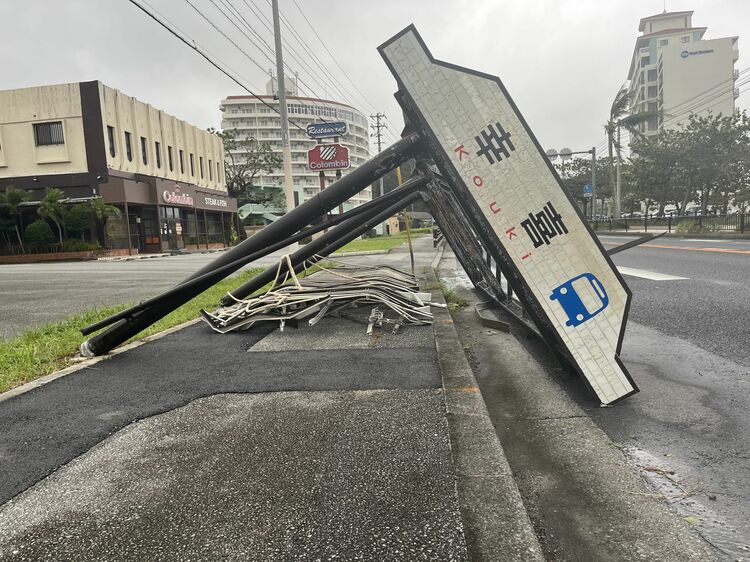
Time off work varies depending on the shop you work for and your contract. I work part time so I have more days off than many of my friends who often only get 6 scheduled days off each month. Realistically during the summer season this ends up being more as there are frequent typhoons where you cannot dive, but you also cannot go out and explore the island as it is too windy/rainy, providing some much needed rest and recovery time!
Salary varies from shop to shop, and some people describe being able to save around 200 USD per month whereas others struggle to get by! It is imperative to make sure you are fully aware of the costs of accommodation and car rental before you make the decision to work here.
The diving makes everything worth it! The cool rock formations, crystal clear waters, stunning corals and amazing marine life, plus you often get to visit different sites around the island. My current favourite is the labyrinth dive site around Sesoko island which has some amazing caverns and channels to swim through, and the way the light filters down through the rocks is absolutely breathtaking!
It is also really amazing to have the opportunity to experience a cultural exchange, more so than I have experienced in other countries. In many diving destinations, the area has become extremely tourist-focused and loses some of its local charm, but I don’t find that in Okinawa. It has been an incredible experience to learn the Japanese and Okinawa culture whilst being a part of it and I am looking forward to the rest of my time here, maybe I will eventually be semi-fluent in the language!
If you enjoy gorgeous diving, rich history, delicious food and learning about other cultures, then working in Okinawa might just be for you, and I hope this article helps you get started on your journey!